How Historical Performance Streaks in Specific Track Surfaces Influence Wager Adjustments Across International Racing Calendars
Klara Richter · Nov 13, 2026
How Historical Performance Streaks in Specific Track Surfaces Influence Wager Adjustments Across International Racing Calendars
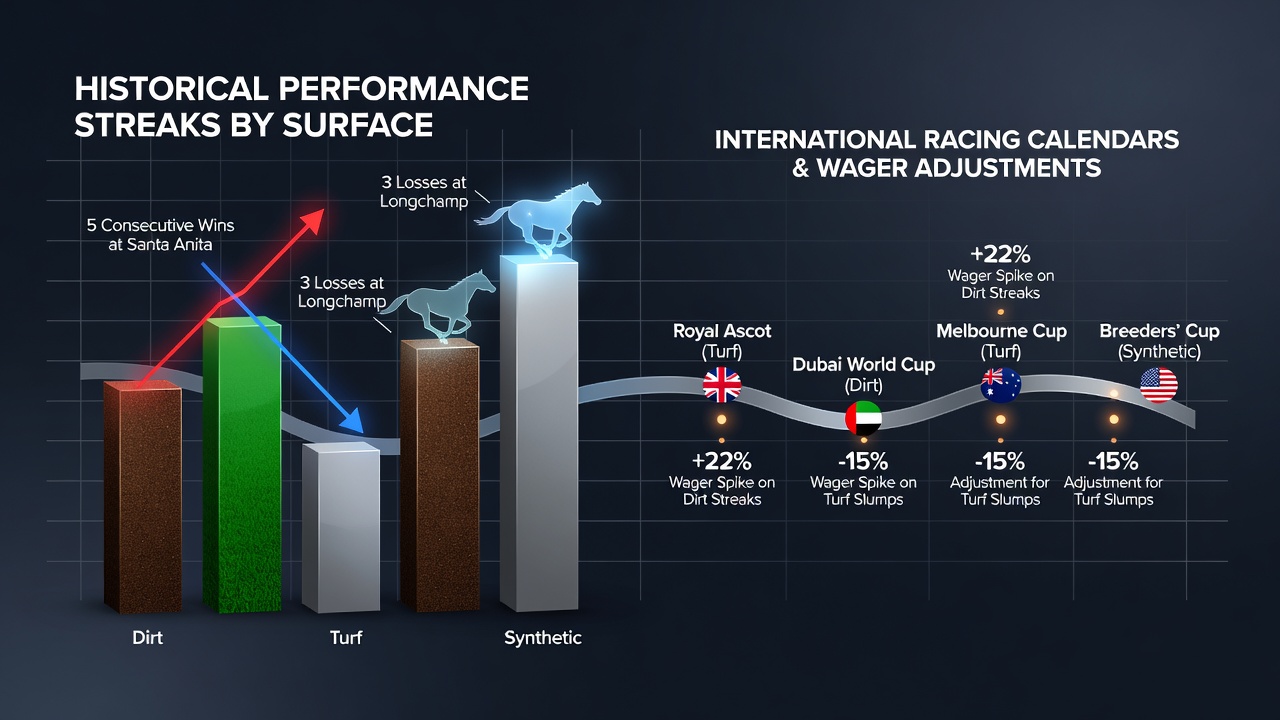
Track surfaces shape performance records in horse racing, and historical streaks on turf, dirt, or synthetic materials often guide how betting markets recalibrate across global schedules. Data compiled by racing authorities shows that horses with repeated success on one surface type tend to see their odds tighten when similar conditions appear again in future fixtures.
Track Surface Categories and Performance Records
International calendars feature distinct surface types, each with measurable impacts on results. Turf tracks dominate European and Australian events, while dirt surfaces remain standard in many North American venues, and synthetic options appear more frequently in Japan and parts of the Middle East. Researchers at the International Federation of Horseracing Authorities have documented that performance streaks lasting three or more races on the same surface correlate with adjusted starting prices in subsequent meetings.
Bookmakers integrate these patterns into line movements by reviewing past race data from official timing systems. When a horse posts consistent top-three finishes on turf over multiple seasons, operators in markets from Hong Kong to France respond by shortening odds for upcoming turf races while lengthening them for switches to dirt. This adjustment process draws from aggregated statistics rather than single events.
Data Patterns Across Regions
Studies of Australian racing seasons reveal that horses maintaining winning streaks on synthetic tracks receive notable market corrections when entered in similar conditions during the spring carnival period. Figures released by Racing Australia indicate that such streaks influence tote payouts and fixed-odds boards by an average margin of 15 to 20 percent compared to horses without surface-specific histories. Similar patterns emerge in US circuits where dirt specialists see line shifts ahead of Breeders' Cup events.
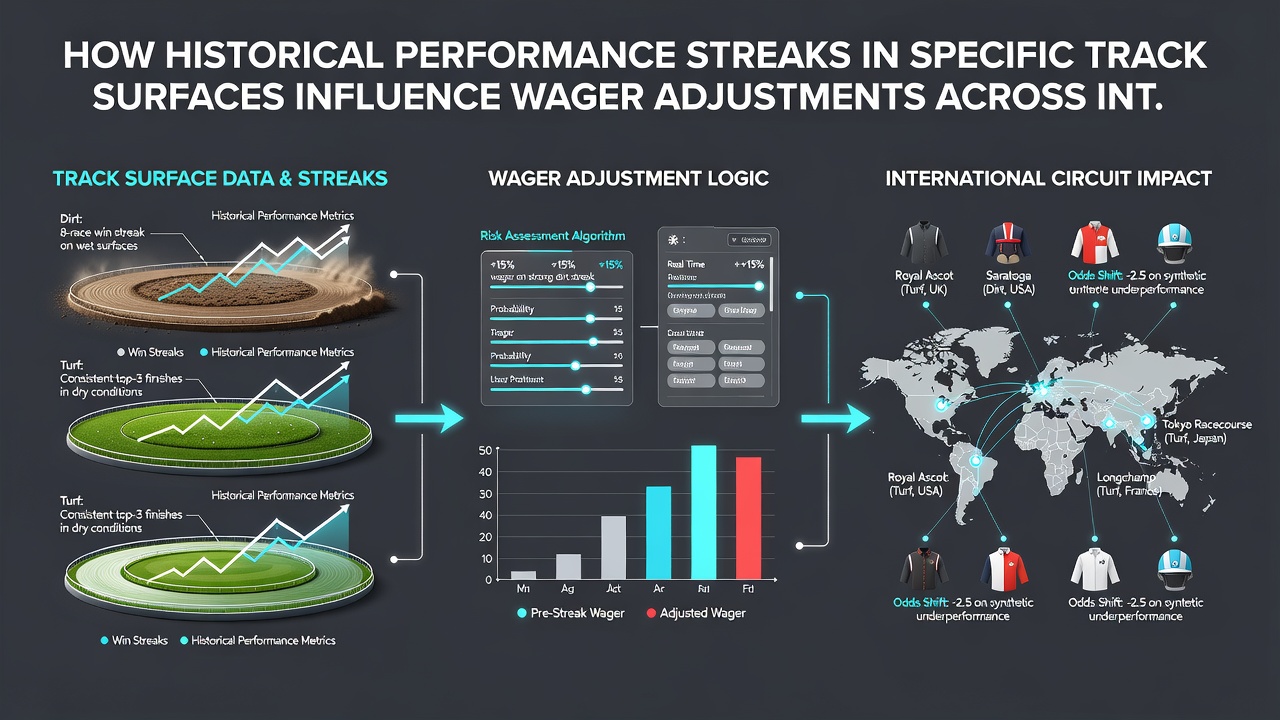
European fixtures add another layer, as weather-affected turf conditions amplify streak effects. Observers note that data from the French Galop organization tracks how prolonged success on heavy ground leads to earlier market tightening for autumn races. In contrast, Japanese tracks with consistent synthetic surfaces produce steadier adjustments because surface variables remain more stable year-round.
Wager Adjustments in International Calendars
Calendars spanning multiple continents require operators to align surface history with travel and seasonal factors. A horse arriving from an Australian dirt campaign to a European turf event in late autumn often sees expanded odds until surface-specific data from training reports updates the model. This recalibration happens because historical datasets show reduced win rates when surface changes occur without prior adaptation races.
November 2026 schedules include several high-profile meetings where these dynamics will play out again. Events in Australia and the United States feature horses carrying documented streaks from earlier months, prompting pre-meeting odds revisions based on surface records stored in central databases. Industry reports from the National Thoroughbred Racing Association highlight that such revisions occur in waves, first on ante-post markets and later on race-day boards as fresh training data arrives.
Statistical Models and Market Responses
Quantitative models used by betting platforms incorporate variables such as race distance, going description, and streak length to generate expected value ranges. When streaks exceed four consecutive races on one surface, the models flag elevated probabilities that feed directly into line movements. This process remains consistent across jurisdictions because the underlying performance data comes from standardized timing and result archives.
Case examples from past seasons illustrate the mechanism. One study of Hong Kong tracks found that horses with turf streaks received progressive tightening over three weeks leading into major meetings, while those lacking surface matches experienced slower or minimal shifts. Comparable outcomes appear in South African and Brazilian calendars where surface transitions occur more regularly due to venue rotations.
Conclusion
Historical performance streaks tied to specific track surfaces continue to drive systematic wager adjustments throughout international racing calendars. Official datasets from multiple authorities demonstrate clear correlations between surface records and market movements, allowing operators to refine odds ahead of each fixture. As November 2026 approaches, these established patterns will again shape how lines respond to confirmed entries and updated statistics.